We’ve all been there: you’re in the middle of an important task or a crucial gaming session, your mouse starts acting erratically, and you realize your trusty mouse pad is nowhere to be found, or worse, completely worn out. Suddenly, smooth navigation becomes a frustrating chore. But don’t fret! As a product designer with over a decade of experience crafting the perfect surfaces for your peripherals, and as a voice for Sdrav.com, I can tell you that a proper mouse pad, while ideal, isn’t always immediately available. This is where the magic of a Makeshift Mouse Pad comes in handy, offering a quick, often free, solution to keep you productive and precise.
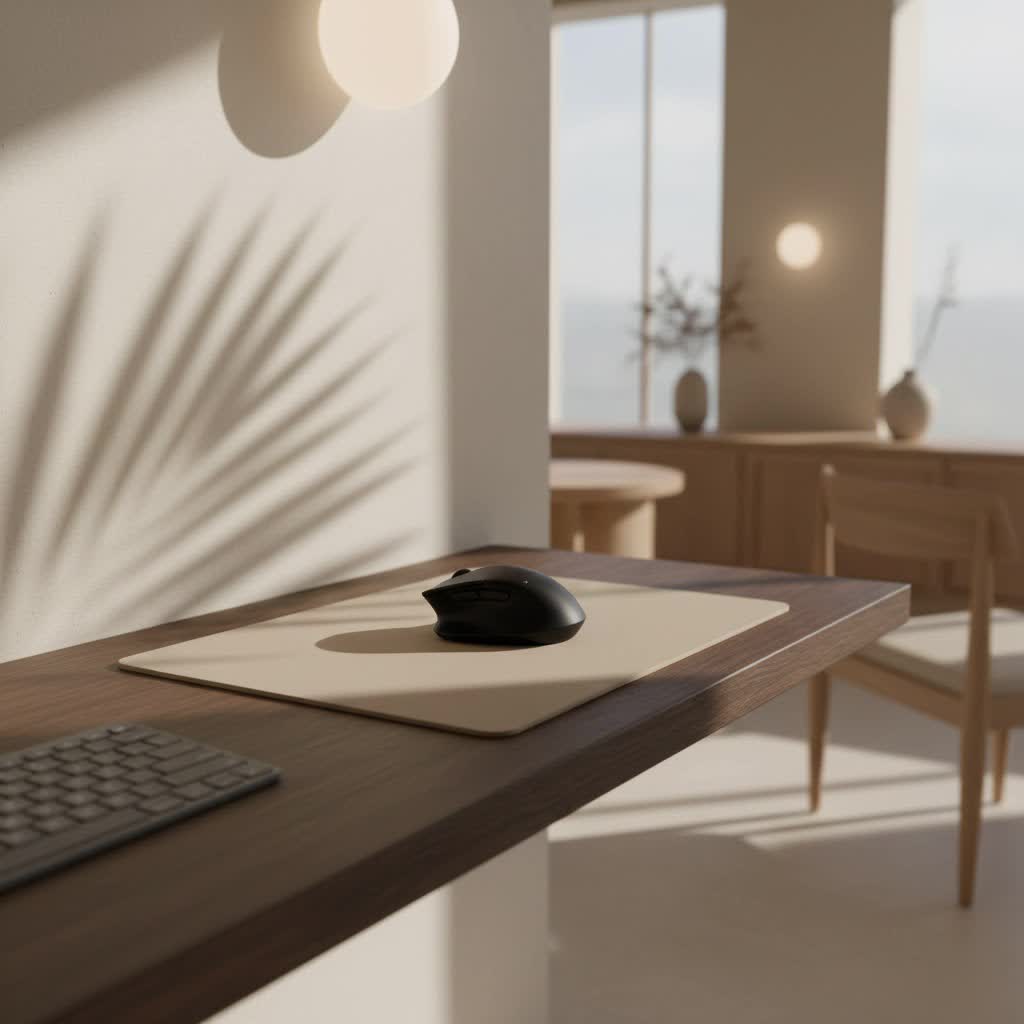
Modern optical and laser mice are incredibly versatile compared to their ball-mouse ancestors, capable of tracking on a wide array of surfaces. However, even the best mice can struggle with highly reflective, transparent, or uneven textures. Finding the right improvised surface isn’t just about making do; it’s about understanding what your mouse needs to perform optimally. Let’s dive into how you can transform everyday items into a functional makeshift mouse pad and what properties to look for to ensure seamless navigation.
What Makes an Ideal Makeshift Mouse Pad?
Before we start rummaging through our homes, let’s understand the fundamental characteristics that make a surface suitable for mouse tracking. Knowing these will empower you to find the best possible mouse pad substitute for your immediate needs.
Flatness and Stability: Crucial for Consistent Tracking
|
Our Picks for the Best Mouse Pad in 2026
As an Amazon Associate I earn from qualifying purchases.
|
||
| Num | Product | Action |
|---|---|---|
| 1 | KTRIO Large Gaming Mouse Pad with Stitched Edges, Extended Mousepad with Superior Micro-Weave Cloth, Non-Slip Base, Water Resist Keyboard Pad for Gamer, Office & Home, 31.5x15.7in, Black Topographic |

|
| 2 | KTRIO Excel Shortcuts Mousepad with Superior Micro-Weave Cloth, Extended Mousepad with Stitched Edges, Non-Slip Base, Water Resist Keyboard Pad for Gamer, Office & Home, Excel Shortcuts |
|
| 3 | MROCO Ergonomic Mouse Pad with Gel Wrist Rest, Comfortable Mousepad with Smooth Wrist Support Surface and Non-Slip PU Base for Pain Relief, Computer, Laptop, Office & Home, 9.4 x 8.1 in, Blue Waves |
|
| 4 | KTRIO Large Gaming Mouse Pad with Stitched Edges, Extended Mousepad with Superior Micro-Weave Cloth, Non-Slip Base, Water Resist Keyboard Pad for Gamer, Office & Home, 31.5x15.7in, Black Gold |
|
| 5 | MROCO Ergonomic Mouse Pad with Gel Wrist Rest, Comfortable Mousepad with Smooth Wrist Support Surface and Non-Slip PU Base for Pain Relief, Computer, Laptop, Office & Home, 9.4 x 8.1 in, Cloud Forest |
|
| 6 | MROCO Ergonomic Mouse Pad with Gel Wrist Rest, Comfortable Mousepad with Smooth Wrist Support Surface and Non-Slip PU Base for Pain Relief, Computer, Laptop, Office & Home, 9.4 x 8.1 in, Black Flower |
|
| 7 | MROCO Ergonomic Mouse Pad with Gel Wrist Rest, Comfortable Mousepad with Smooth Wrist Support Surface and Non-Slip PU Base for Pain Relief, Computer, Laptop, Office & Home, 9.4 x 8.1 in, Blue Marble |
|
| 8 | KTRIO Large Gaming Mouse Pad Desk Mat, Superior Micro-Weave Cloth for Precise Mouse Control, Non-Slip Rubber Base, Stitched Edges, Water-Resistant, for Gamer, Office & Home, 31.5\" x 11.8\" inches |
|
| 9 | MROCO Ergonomic Mouse Pad with Gel Wrist Rest, Comfortable Mousepad with Smooth Wrist Support Surface and Non-Slip PU Base for Pain Relief, Computer, Laptop, Office & Home, 9.4 x 8.1 in, Black Gold |
|
| 10 | MROCO Ergonomic Mouse Pad with Gel Wrist Rest, Smooth Wrist Support Surface, Non-Slip PU Base for Pain Relief, Comfortable Mousepad for Computer, Laptop, Office & Home, 9.4 x 8.1 in, Black |
|
The cornerstone of any good mouse surface, whether purpose-built or improvised, is flatness. Your mouse’s sensor needs a consistent distance from the surface to track movements accurately. An uneven surface can cause your cursor to jump, skip, or simply stop responding, which is incredibly frustrating. Think of it like trying to draw a straight line on a crumpled piece of paper – it’s just not going to happen smoothly. Equally important is stability; a surface that slides around will negate any benefits it offers. A firm, unyielding base is paramount.
Surface Texture: Why Matte and Non-Reflective is Best for Optical Sensors
Optical mice, which are the vast majority of mice today, work by illuminating the surface below and taking rapid snapshots. They compare these images to detect movement. A matte, non-reflective surface with a subtle texture provides the sensor with plenty of visual data points to track. Highly reflective or transparent surfaces, like glass or polished metal, confuse the sensor by bouncing light unpredictably or not providing enough distinct features to track. This is why a simple piece of paper often works better than a glossy magazine cover.
Material Density and Firmness: Avoiding Unwanted Movement and Sensor “Gaps”
While often overlooked, the density and firmness of your chosen material play a role. A surface that’s too soft or cushioned can create slight indentations or flex under pressure, leading to inconsistent tracking or even “sensor lift-off” if the mouse slightly dips into the material. A firm surface ensures that your mouse glides consistently and maintains optimal contact, providing the smooth experience you need. This also helps protect your desk or table from wear and tear, another benefit of having an extra layer between your mouse and furniture.
Top Household Items for a Quick Mouse Pad Fix
Now that we know what to look for, let’s explore some common household items that can serve as an excellent homemade mouse pad in a pinch. You’d be surprised what you can repurpose!
Paper Power: From Notebooks to Stacks
Paper, in its various forms, is arguably the most common and accessible makeshift mouse pad material.
- Plain Printer Paper: A standard sheet of A4 or letter-sized paper is often all you need. It’s matte, non-reflective, and provides a decent texture for optical sensors. For added stability and a slightly thicker surface, a stack of paper works even better.
- Paper Folders: These are a fantastic option because they are usually solid colors, have a matte finish, and offer a firm, flat surface. A standard manila or colored paper folder is a classic mouse pad substitute.
- Magazines or Thick Books: Choose a magazine with a non-glossy cover or simply open a thick book to a page with suitable paper. The key here is a flat, firm surface. Hardcover books are particularly good as they offer a solid base.
- Notebooks: Many notebooks, especially those with sturdy covers, can double as an effective surface. The spiral-bound type can be a bit tricky due to the uneven edge, but a composition notebook or a sturdy journal can work wonders.
Cardboard Creations: Shoeboxes and Cereal Boxes
Cardboard is another excellent material for an improvised mouse pad, offering firmness and often a good tracking surface.
- Shoe Boxes: The lid or the flattened side of a shoebox provides decent rigidity and a matte surface. An added bonus: if you’re using your mouse on a soft surface like a couch or bed, a shoebox can even elevate your mouse to a more ergonomic height, preventing wrist strain. This is a brilliant improvised mouse pad solution for comfort.
- Cereal Boxes or Other Packaging: The flat, non-glossy side of a cereal box or similar packaging can be cut to size. Just make sure the surface isn’t too shiny, which some food packaging can be.
Fabric Finds: Old T-Shirts and Small Rugs
Fabric is what many traditional mouse pads are made of, so it’s a natural fit for an alternative mouse pad.
- Old T-Shirt or Piece of Cloth: A flat, tightly woven piece of fabric, like a section of an old cotton t-shirt, can work well. Lay it flat and smooth it out to avoid wrinkles that could interfere with tracking. The key is a relatively smooth but textured surface.
- Small Floor Carpet or Rug Sample: If you have a thin, tightly woven carpet sample, it can provide a surprisingly effective surface. Avoid thick, shaggy carpets, as these will be too uneven.
Beyond the Basics: Unexpected Alternatives
Sometimes, the best solutions are the ones you least expect.
- Dining Placemats: Many placemats, especially those made of a firm, slightly textured material (not plastic or highly glossy), can be perfect. They are designed to be flat and durable.
- Thick Cutting Boards: A solid, non-slip cutting board made of wood or a matte plastic can provide an excellent, stable surface.
- Flat Desk Surfaces: Don’t underestimate your actual desk! Many modern desks made of wood, laminate, or matte Formica provide a perfectly adequate tracking surface on their own.
What Surfaces Should You Absolutely AVOID?
While modern mice are forgiving, some surfaces are simply incompatible with their optical sensors. Knowing what to avoid is as important as knowing what to use.
- Glass and Mirrors: These surfaces are a nightmare for optical mice. The light from the sensor passes straight through or reflects erratically, providing no consistent data for tracking. Your cursor will likely jump or not move at all.
- Highly Glossy or Transparent Surfaces: Similar to glass, anything with a very shiny finish (like a polished marble tabletop or a glossy photo print) will cause tracking issues due to excessive reflection.
- Uneven or Soft/Cushioned Surfaces: As mentioned earlier, surfaces that are not flat or that allow your mouse to sink in (like a soft bedsheet, a pillow, or thick, uneven fabric) will lead to highly inaccurate and frustrating tracking. Your mouse needs a firm, consistent foundation.
Pro Tips for Maximizing Your Makeshift Mouse Pad
Even with the right material, a few tweaks can make all the difference.
- Ensure Stability: If your chosen mouse pad alternative tends to slide, try placing a non-slip material underneath it, like a thin rubber mat or even a few strips of tape on the underside (if it won’t damage the surface).
- Consider Ergonomics: If you’re on a couch or bed, using a shoebox or a thick book can help elevate your wrist and forearm, creating a more natural and comfortable angle. This simple ergonomic mouse pad hack can prevent strain during extended use.
- Cleanliness Matters: Dust, crumbs, or stray hairs on your makeshift surface can interfere with tracking. Give your chosen surface a quick wipe down before use to ensure the best performance.
- Test Your Mouse: Not all mice are created equal, and some may be pickier than others. Always do a quick test run to see how well your mouse tracks on the improvised surface before settling in for serious work or play.
Expert Insight: The Sdrav Perspective on Mouse Pad Alternatives
Even as a designer of premium mouse pads, I understand the need for quick, effective solutions. “A truly great workspace isn’t just about premium gear; it’s about making the most of what you have,” says Alex Nguyen, Lead Product Designer at Sdrav.com. “Sometimes, the perfect mouse pad is right under your nose – or on your bookshelf! The key is understanding how your mouse interacts with its environment and choosing a surface that offers consistency and a good optical reference.” This perspective underscores Sdrav’s commitment to empowering users with practical knowledge, whether they’re using a top-tier gaming pad or a temporary fix.
Frequently Asked Questions About Makeshift Mouse Pads
Here are some common questions we get about finding a quick mouse pad solution:
Q: Can I use any piece of paper as a mouse pad?
A: Generally, yes, but opt for plain, matte paper. Glossy paper or paper with busy patterns can sometimes interfere with an optical mouse’s sensor. A stack of paper provides better stability and cushioning than a single sheet.
Q: Do gaming mice work well on makeshift surfaces?
A: Most modern gaming mice, with their high-precision optical sensors, can track surprisingly well on suitable makeshift surfaces like plain paper or matte cardboard. However, for competitive gaming, a dedicated gaming mouse pad will always offer superior glide, consistency, and precision due to optimized materials and tracking surfaces.
Q: How long can I rely on a makeshift mouse pad?
A: A makeshift mouse pad is an excellent temporary solution for a few hours or even a few days. However, for long-term use, it’s best to invest in a proper mouse pad. Dedicated pads offer better durability, consistent performance, wrist support, and often anti-slip bases that improvisations lack.
Q: What’s the best way to make a DIY mouse pad if I have time?
A: If you have a bit more time, you can create a more robust DIY mouse pad. A popular method involves gluing a piece of soft fabric (like an old t-shirt or felt) onto a firm piece of cardboard or thin wood. Ensure the fabric is stretched taut and smooth before gluing. Add a non-slip backing with rubber feet or double-sided tape for extra stability.
Conclusion
The next time you find yourself without a dedicated mouse pad, don’t let it derail your workflow or gaming experience. With a little creativity and an understanding of what your optical mouse needs, you can quickly conjure up a perfectly functional makeshift mouse pad from everyday household items. From a humble stack of paper to a sturdy shoebox, the possibilities are vast. Experiment with different surfaces to find what works best for your mouse and your personal comfort. While these solutions are fantastic for temporary needs, remember that for the ultimate in precision, comfort, and durability, a purpose-built mouse pad is always the way to go. For more in-depth reviews and guidance on choosing the perfect permanent mouse pad, be sure to visit Sdrav.com and explore our expert insights.
